snıff

Belgian Shepherd

Life expectancy
No cited life expectancy for this breed has been read in yet.
Highest allele frequency
Bald Thigh Syndrome
8.3% of gene copies · 24 dogs tested · Donner 2023
Behind this page
136 dogs
behind the atlas figures · 1,231 tested for variants

The tested variant with the highest allele frequency is Bald Thigh Syndrome, at 8.3% among the 24 Belgian Shepherds tested (Donner 2023; gene copies, not dogs), then Spongy Degeneration with Cerebellar Ataxia (4.4%) and Degenerative Myelopathy (4.2%).

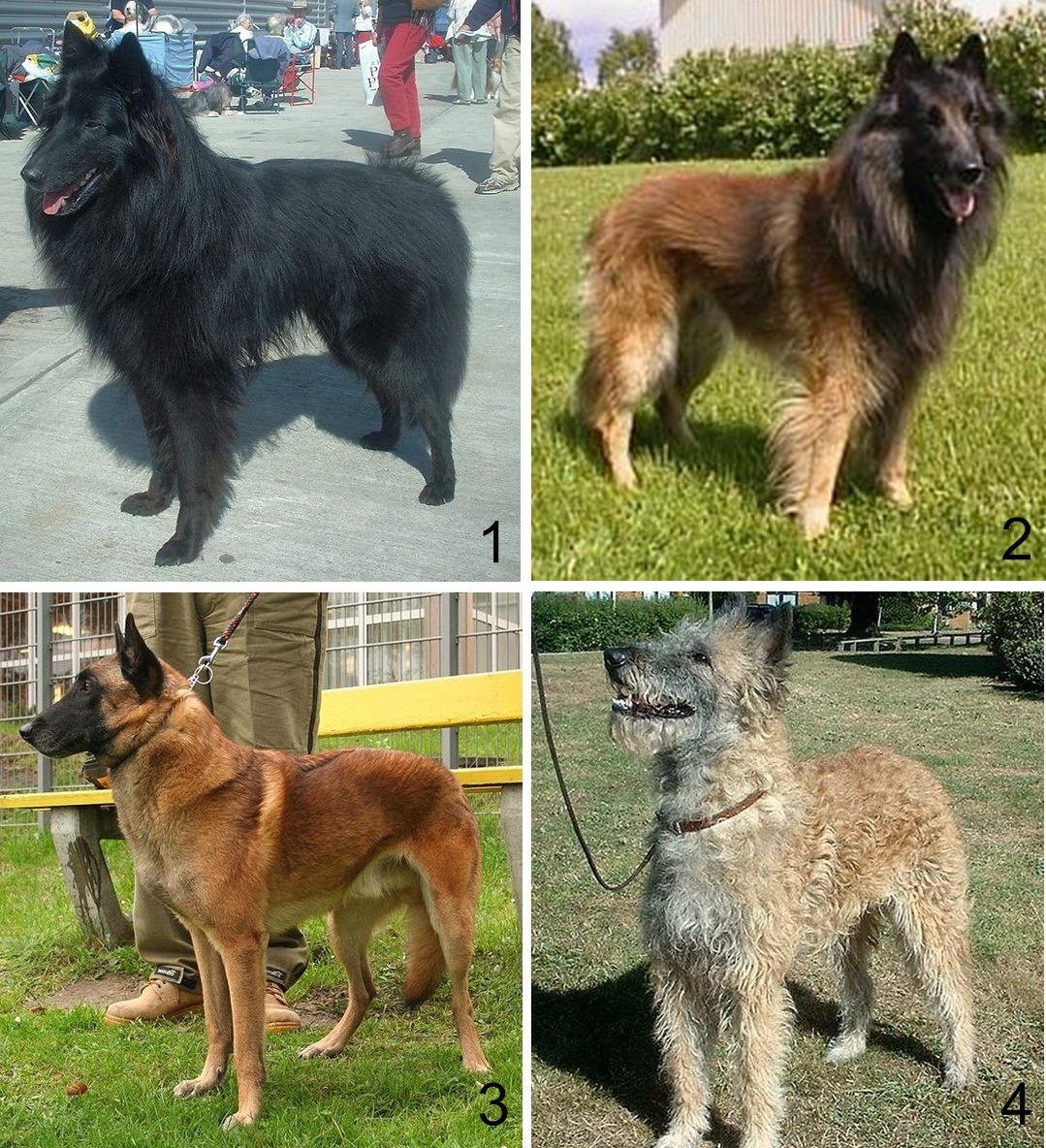
Belgian Shepherd
Photo: Various, see description. Compiled by User:Adventurous36 · CC BY-SA 4.0 · Wikimedia

Also known as Chien De Berger Belge.

Mendelian-disease genetics

Which disease variants turn up in Belgian Shepherds?

From a panel of 250 Mendelian-disease variants screened in 1,054,293 dogs (Donner et al. 2023), 12 turn up in Belgian Shepherds at observable frequency. The figure beside each is its allele frequency. Of the gene copies tested in this breed, the share that carry the variant. Every dog carries two copies, so this is not the share of dogs. It is not clinical risk. Most recessive variants require two copies for disease expression; many dominant variants show incomplete penetrance. Read this as a population fingerprint of what's in the gene pool, not a per-dog prediction.

Bald Thigh Syndrome
Autosomal recessive
low frequency band 8.3%
n = 24 dogs · 1 variant tested · OMIA:002168-9615 · omia.org →
IGFBP5what this gene does

IGFBP5 is a gene that helps regulate growth factors involved in tissue development and repair.

For your dog: If you have a sighthound, it’s worth mentioning IGFBP5-related risks to your vet, but being a carrier doesn’t mean your dog will develop the syndrome.

Pathogenic low frequency band 4.4%
n = 1,186 dogs · 1 variant tested · OMIA:002110-9615 · omia.org →
Degenerative Myelopathy (DM)
Autosomal recessive
low frequency band 4.2%
n = 1,186 dogs · 1 variant tested · OMIA:000263-9615 · omia.org →
SOD1what this gene does

SOD1 is a gene that helps protect cells from damage caused by harmful molecules called free radicals.

For your dog: If your dog is a carrier of SOD1 variants, it's worth discussing with your vet, but remember carrier status doesn't mean your dog will get the disease.

Dilated Cardiomyopathy risk factor (PDK4-related)
Multifactorial (OMIA); Autosomal dominant (Incomplete penetrance) (Donner 2023)
marker disputed 2.5%
n = 40 dogs · 2 variants tested · OMIA:000162-9615 · omia.org →
PDK4what this gene does

PDK4 helps regulate how cells use energy, especially in the heart muscle.

For your dog: If your dog is one of the breeds known to carry this gene, it’s worth discussing heart health with your vet, but being a carrier doesn’t mean your dog will develop disease.

n = 1,186 dogs · 2 variants tested · OMIA:002089-9615 · omia.org →
Hyperuricosuria (HUU)
Autosomal recessive
low frequency band 0.72%
n = 1,186 dogs · 1 variant tested · OMIA:001033-9615 · omia.org →
SLC2A9what this gene does

SLC2A9 is a gene that helps regulate uric acid levels in a dog's body. It plays a role in how the kidneys handle this substance.

For your dog: If your dog is one of the breeds known to carry this gene variant, it’s worth discussing with your vet to understand any potential urinary health concerns.

Canine Scott Syndrome (CSS)
Autosomal recessive
Pathogenic low frequency band 0.34%
n = 1,186 dogs · 1 variant tested · OMIA:001353-9615 · omia.org →
ANO6what this gene does

ANO6 is a gene that helps regulate how blood cells expose certain signals on their surface, which is important for normal blood clotting.

For your dog: If your dog is from a breed known to carry ANO6 mutations, it’s worth discussing with your vet before any procedures to ensure bleeding risks are managed.

Cystinuria Type I-B (SLC7A9 p.A217T)
Autosomal dominant (OMIA); Autosomal recessive (Incomplete penetrance) (Donner 2023)
marker disputed 0.30%
n = 1,186 dogs · 2 variants tested · OMIA:001880-9615 · omia.org →
SLC7A9what this gene does

SLC7A9 is a gene that helps transport certain amino acids in the kidneys. It plays a role in how the body handles cystine, an amino acid that can form crystals.

For your dog: If your dog is a carrier, it’s worth discussing with your vet to monitor urinary health and catch any issues early.

n = 266 dogs · 1 variant tested · OMIA:002279-9615 · omia.org →
low frequency band 0.13%
n = 1,184 dogs · 1 variant tested · OMIA:000157-9615 · omia.org →
FGF4what this gene does

FGF4 influences leg length by affecting bone growth, leading to shorter legs in certain breeds.

For your dog: If your dog is from a breed known to carry this gene, it's worth discussing spinal health with your vet, but being a carrier doesn’t guarantee problems.

low frequency band <0.1%
n = 1,186 dogs · 2 variants tested · OMIA:002120-9615 · omia.org →
NDRG1what this gene does

NDRG1 is a gene involved in nerve cell function and maintenance, helping keep the nervous system working properly.

For your dog: If your dog is from a breed known to carry NDRG1 variants, it’s worth discussing with your vet, especially if you notice any mobility issues.

Von Willebrand's Disease, Type 1 (vWD 1)
Autosomal (OMIA); Autosomal recessive (Donner 2023)
low frequency band <0.1%
n = 1,186 dogs · 1 variant tested · OMIA:001057-9615 · omia.org →
Source: Donner J et al. 2023. Genetic prevalence and clinical relevance of canine Mendelian disease variants in over one million dogs. PLOS Genetics 19(2):e1010651 · Evidence: Limited (DTC ascertainment, tag-SNP proxy) · Confounding MEDIUM · License CC-BY-4.0 · Phene IDs from OMIA (Sydney School of Veterinary Science, The University of Sydney; DOI 10.25910/2AMR-PV70).
Sample size in this breed: 1,231 dogs from the Donner 2023 cohort.
In plain terms

What these results mean for a Belgian Shepherd

About 4 in every 100 copies of this gene in the 1,186 Belgian Shepherds tested carry this change (Donner 2023).

  • DM slowly damages the spinal cord in adult dogs, until the back legs stop working. Nothing yet can stop it.
    OMIA 000263-9615

    “This is an adult onset degeneration of the spinal cord that progresses to paraplegia and tetraparesis. There is no successful treatment. A genetic test is available.” OMIA 000263-9615

  • Two copies of the SOD1 gene change mean a dog is at risk, not that it will get sick. Some dogs with two copies never do.
    OMIA 000263-9615

    “some homozygous mutant dogs had no signs of degenerative myelopathy, which suggests incomplete penetrance or other causative loci” OMIA 000263-9615

  • One copy makes a dog a carrier. In the study that found this change, every dog with DM that was tested had two copies.
    OMIA 000263-9615

    “All affected dogs tested were homozygous mutant.” OMIA 000263-9615

What to do
A DNA result isn't a diagnosis. If the way your dog walks changes, take that and the result to your vet.

Not tested, or a mix
Without a test, no one can tell how many copies your dog has. How common it is in a breed says nothing about one dog.

About 3 in every 100 copies of this gene in the 40 Belgian Shepherds tested carry this change (Donner 2023).

  • This gene change was linked to a heart disease called DCM in Dobermans, but it hasn't been shown to cause it. The curated record says a test for it isn't a good guide to heart risk, even in Dobermans.
    OMIA 000162-9615

    “it is evident that any DNA test based on this marker will not be a good indicator of liability to this disorder in Dobermans” OMIA 000162-9615

What to do
A result for this one isn't, by itself, a reason for heart tests. Whether to check your dog's heart is a conversation to have with your vet.

Not tested, or a mix
Outside the Doberman, no one has shown what this change means.

Which Mendelian variants matter most for Belgian Shepherds?

Donner 2023 genotyped 1,231 Belgian Shepherds across the Malinois, Sheepdog and Tervuren varieties and found 12 variants at observable allele frequency. None is common the way the chondrodystrophy retrogene is in a Dachshund, but three stand out. Spongy Degeneration with Cerebellar Ataxia, first described in this breed, has an allele frequency of 4.4% among 1,186 dogs tested. Degenerative Myelopathy has an allele frequency of 4.2%. Spinocerebellar Ataxia with Myokymia and/or Seizures (KCNJ10-related) has an allele frequency of 2.1%. Bald Thigh Syndrome, a sighthound variant, reads 8.3% from only 24 dogs, too few to call a breed figure. The full table is above.

The breed sits in the moderate diversity band, toward its diverse end (mean heterozygosity 0.332). The mean heterozygosity is 0.332. These numbers reflect moderate founder structure relative to the 107 breeds ranked in the atlas (Donner 2023). Interpretation beyond the rank number should come from a veterinary geneticist familiar with the full dataset. The substrate data do not yet identify the breed’s nearest genetic relatives with confidence; a veterinary geneticist can provide population-structure context when reviewing pedigrees.

The practical implication: a breeding pair is worth testing for the three variants above, because each is a recessive carried by a few percent of the breed and two carriers paired together is the only way an affected puppy is born. For a pet dog, the same three tests tell you what to watch, and a veterinary geneticist’s reading of pedigree and phenotype remains the standard tool beyond them.

What should I feed a Belgian Shepherd?

Belgian Shepherds are working dogs with metabolisms tuned for full-day stockwork. A pet Belgian Shepherd eating a maintenance kibble in a suburban yard is being fed for a job they are not doing. Overfeeding is the most common nutritional failure in the breed.

Start with a high-quality large-breed adult formula that meets AAFCO standards and has been validated through feeding trials. Calcium management for giant-breed skeletons is not a primary concern here. The priority is matching calorie intake to actual activity level, not to the food’s marketing.

None of the breed’s Mendelian variants above carries a dietary rule, so you are not navigating breed-specific food restrictions. Focus on matching calories and protein to activity level. This is a luxury. Feed for the individual dog’s energy expenditure, body condition, and age.

Protein adequacy is routine. The NRC 2006 minimum for adult dog maintenance is 10 g crude protein per 100 g dry matter (NRC, “Nutrient Requirements of Dogs and Cats,” 2006, p. 359). Working Belgian Shepherds doing sustained exercise will need more. Working Belgian Shepherds may benefit from higher-protein formulations (18-25% crude protein) on days with sustained exercise. The key is titration to the dog’s actual work, not a fixed formula.

Age-stage feeding matters for growth and senior transitions. Puppies benefit from a large-breed puppy formula with controlled calcium and a calcium-to-phosphorus ratio between 1.1:1 and 2:1 to support steady skeletal development. Senior dogs over age 10 may benefit from joint-supporting formulations with glucosamine and chondroitin, though the evidence for long-term prevention remains limited. Monitor body weight monthly; Belgian Shepherds that maintain lean muscle into old age show better function and longer lifespan.

Raw and home-cooked diets are legitimate options if formulated by a board-certified veterinary nutritionist. Do not guess proportions; work with a specialist. The Sniff position is that a well-formulated home-cooked diet from a certified nutritionist is superior to a guessed one, but a complete commercial diet with feeding-trial validation beats a guessed home-cooked one.

What we don’t know

No published life table we can cite covers the Belgian Shepherd as one breed; breed clubs estimate 12 to 14 years. The honest gap is that we have not yet identified the breed-specific health problems that limit lifespan. Larger cohorts under longitudinal follow-up would reveal whether hip dysplasia, elbow dysplasia, neurological conditions, or other systemic issues cluster in Belgian Shepherds the way cancer does in Goldens or mitral valve disease does in Cavaliers. The current dataset does not support breed-specific prevalence claims about these conditions.

Belgian Shepherds’ genetic diversity rank places them in the middle band of founder-bottleneck risk. We do not yet know whether this translates into a specific late-onset genetic condition that will emerge as the breed ages in the dataset, or whether the middle rank insulates them from the severe genetic loading seen in more bottlenecked breeds.

What we do not know is whether any recessive combination of alleles contributes to undiagnosed subclinical phenotypes in the population.

Frequently asked questions about Belgian Shepherds

Are Belgian Shepherds good working dogs? Yes. Belgian Shepherds were bred for herding and police work and retain strong prey drive, athleticism, and trainability. They excel in sport, stockwork, and detection roles. Without consistent mental and physical exercise, they can become destructive.

How long do Belgian Shepherds live? No published life table we can cite covers the Belgian Shepherd as one breed. Breed-club estimates are typically 12 to 14 years, depending on lineage and health management.

What is the most common health problem in Belgian Shepherds? Current data do not identify a single breed-dominant condition. Hip and elbow dysplasia are screened by the Orthopedic Foundation for Animals in the breed; owners should request OFA scores before breeding.

Should I do a DNA test on my Belgian Shepherd? Breed-specific Mendelian panels are not yet recommended, as no high-frequency disease variants have been identified in Belgian Shepherds (Donner 2023). General ancestry and parentage verification panels are useful for breeding transparency. Pedigree review and phenotypic assessment remain the standard tools.

What is the best diet for a Belgian Shepherd? A high-quality large-breed adult formula validated through feeding trials, with calorie and protein matched to the dog’s actual activity level. Working Belgian Shepherds may benefit from higher protein (18-25%) on exercise days. Monitor body condition monthly and adjust as needed.

Are Belgian Shepherds prone to any genetic diseases? No high-frequency Mendelian variants have been identified in the breed. This does not mean the breed is disease-free, but rather that the published cohort data do not yet show single-locus disease variants suitable for screening.

Do Belgian Shepherds have food allergies or sensitivities? Food allergies in Belgian Shepherds are not documented at a breed-typical rate. Individual dogs may have protein sensitivities or grain intolerances, as with any breed. Work with your veterinarian on elimination diets if your dog shows signs of food reactivity.

What grooming does a Belgian Shepherd need? Belgian Shepherds have double coats that shed year-round and heavily during seasonal blows. Brush 2-3 times per week during shedding; daily brushing during seasonal coat changes reduces loose hair significantly. Nail trimming, ear cleaning, and dental care follow standard large-breed protocols.

Names & origins

Other names

The Belgian Shepherd is also recorded as Chien De Berger Belge.

Identified as Belgian Shepherd (VBO:0200144) in the Vertebrate Breed Ontology (Mullen et al. 2025, CC-BY 4.0) · registry IDs FCI 15 · VeNom 14761.

For researchers Population genetics, disease models and every recorded condition Open the research detail for the Belgian Shepherd
What the atlas says about Belgian Shepherd

In the atlas, the Belgian Shepherd clusters consistently as Belgian Shepherd (100% of the 136 dogs here). Genetic diversity is high (mean heterozygosity 0.3323), reflecting either a mixed-breed cluster or breeds with broad genetic backgrounds.

Mean heterozygosity is 0.332, notably high, which indicates a broad genetic background.

Genetic dimensions · CanVAS atlas

What the atlas genotypes say about Belgian Shepherd

Computed from the 14,478 CanVAS dogs in the Atlas, on an imputed genotype backbone: 77,215 directly typed sites per dog, imputed to 9.67 million variants.

The confidence below counts dogs, not reads: it is the size of the sample, and it is separate from how the genotypes were measured.

Dogs behind these figures
136Founders
124 from Momozawa, 12 from Cairns
Genetic diversity
0.33Moderate
Mean heterozygosity across the breed. 29th most diverse of 107 ranked populations (27th to 35th when its dogs are resampled).
What does genetic diversity mean?

How varied a breed's gene pool is — the share of gene spots where a typical dog of the breed carries two different versions rather than two identical ones.

How to read it: Higher = more diverse. Among well-sampled breeds it ranges roughly 0.22 (least diverse) to 0.33 (most diverse).

Diversity is a strength, not a verdict on any individual dog. Lower diversity means it's worth paying attention to recessive-risk testing — not that a dog is doomed.

Cluster structure
Splits into two genetic sub-populations
Intra-breed RMS distance: 26.70 · likely working/show-line, regional, or kennel lineage split.
What does within-breed variation mean?

How much individual dogs within the breed differ from each other genetically.

How to read it: Higher = more internal variety among individuals of the breed.

Sensitive to how many dogs of the breed we've sampled.

Related breeds
In the Herding group
Explore the full lineage map →
VBO foundation stock (breeding records) · AKC breed group
Relatedness is documented lineage + kennel family. Genetic-ancestry distance measures diversity, not kinship, so it isn't used here.
n = 136 dogs · high sample · CanVAS (Brundage 2026) · Sniff Atlas
A gift to human medicine

Belgian Shepherds are a natural model for human disease

Because the same genes cause the same conditions across species, the inherited conditions documented in Belgian Shepherds help researchers understand, and work toward treating, the human diseases they model. This is the dog advancing human medicine. The breed models the human disease; it does not have it, and this is not a prediction for your dog.

Human equivalents via OMIA → Mondo / OMIM. Model-of, not identity. The named gene is the canine locus, not a claim that a pet has the human disease.
Documented in OMIA

Every condition recorded in the Belgian Shepherd

Beyond the testable carriers above, OMIA's literature catalogue records 9 genetic conditions in the Belgian Shepherd, 8 of which have a known human equivalent. This is the documented landscape across all Belgian Shepherds ever studied, not a prediction for any one dog.

Online Mendelian Inheritance in Animals (OMIA); Nicholas, Tammen & Sydney Informatics Hub, DOI 10.25910/2AMR-PV70
Documented in the breed's literature is not carrier status and not a forecast for an individual dog. Human equivalents are mapped via Mondo/OMIM. Allele frequencies (above) are the separately-measured testable subset (Donner 2023).
The data behind this page

Where every number on this page came from.

This page draws on three primary data sources. Allele frequencies for the Mendelian section come from Donner et al. 2023 (CC-BY-4.0). We grade these data at evidence Limited because the cohort is a direct-to-consumer ascertainment, which biases toward owners who chose to test their dogs. The panel also uses tag-SNP proxies for some variants rather than direct causal-variant assays. Limited is a study-design grade, not a quality grade: the Donner cohort is the largest open canine-genotype dataset in existence and we are grateful for it. We rate the confounding MEDIUM.

Population-genetic dimensions (heterozygosity, intra-breed PCA distance, nearest neighbors, trait-locus frequencies) come from CanVAS (Brundage 2026), harmonized through the Sniff Atlas. The exact release date and verification commit are pinned at the bottom of the page so a researcher can trace a number back to a specific snapshot. The disease-gene-variant graph comes from OMIA (Online Mendelian Inheritance in Animals; Nicholas, Tammen, and the Sydney Informatics Hub at the Sydney School of Veterinary Science, The University of Sydney; retrieved April 2026, DOI 10.25910/2AMR-PV70).

What this page does not yet have. Inheritance modes and per-disease penetrance evidence from Donner 2023 are in the structured data for every variant the panel covers. Mondo, OMIM, Ensembl, and HGNC cross-references live on the gene and disease pages this page links to, rather than being repeated here. What is still absent from this breed page is anything not in the cited panel, and each such gap carries its cause where it appears.

How to cite this page. The computed dimensions on this page are derived from the open Sniff Atlas v1.0.2 (Gehring 2026, doi:10.5281/zenodo.20566358, CC-BY 4.0). Full citation formats including BibTeX, RIS, and CITATION.cff at sniff.world/cite.

Some things about living with a belgian shepherd never make it into a database. Add what you know as a Keeper, in your words →

Lived experience, kept beside the science.
Add your belgian shepherd to the atlas

We have 136 belgian shepherds. We do not have yours.

Every belgian shepherd added sharpens the breed's genetic neighborhood. Enrollment is free. The data stays open. The star is permanent.

Want to wait for DNA uploads?

Leave your email and we'll let you know the moment DNA uploads open for Belgian Shepherds.

References
  1. Donner J, Freyer J, Davison S, Anderson H, Blades M, Honkanen L, et al. (2023). Genetic prevalence and clinical relevance of canine Mendelian disease variants in over one million dogs. PLOS Genetics 19(2):e1010651. doi:10.1371/journal.pgen.1010651
  2. Brundage DM (2026). CanVAS: A Harmonized and Imputed Canine Variant Atlas. bioRxiv. doi:10.64898/2026.04.13.718238
  3. Nicholas, F.W., Tammen, I., & Sydney Informatics Hub. (2026). Online Mendelian Inheritance in Animals (OMIA) [dataset]. The University of Sydney. https://omia.org. doi:10.25910/2AMR-PV70 (retrieved April 2026).
Last updated
Sources: CanVAS (Brundage 2026) · Donner 2023 · OMIA