Which Mendelian variants matter most for Boxers?
The Mendelian-disease table above lists 194 variants screened in 4,557 Boxers (Donner 2023). A few stand apart by allele frequency and clinical impact.
Hyperuricosuria (HUU)
Hyperuricosuria in Boxers is an autosomal recessive disorder of purine metabolism that predisposes to bladder-stone formation. The variant’s allele frequency among tested Boxers is 0.30% (Donner 2023, n=4,557). How often dogs with two copies form stones has not been measured in Boxers: the Donner cohort followed one such dog (0 of 1 at-risk dogs confirmed), too few to give a rate. Testing exists; with a variant this rare, most Boxer breeders will not rank it first.
What should I feed a Boxer?
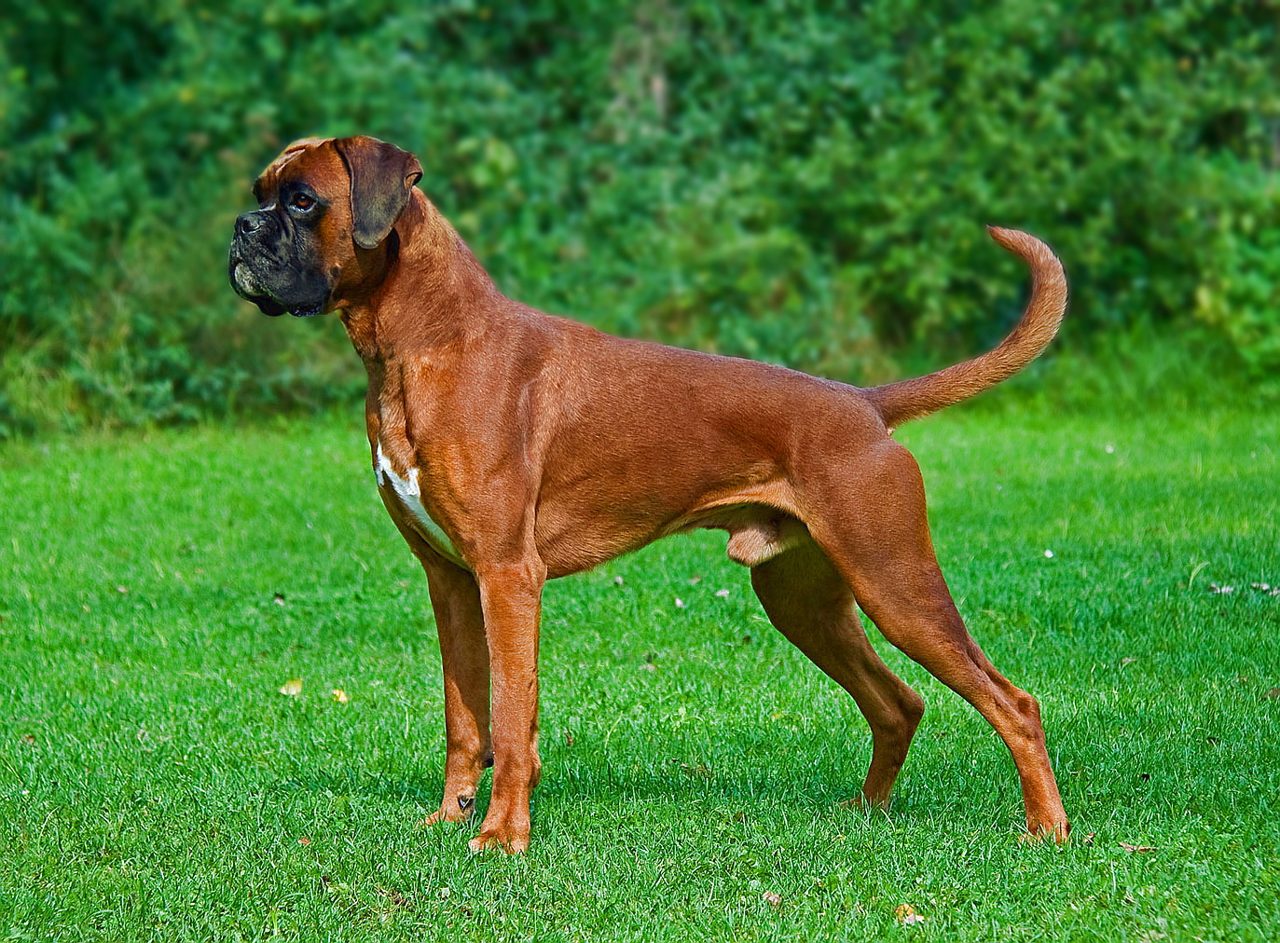
Feeding a Boxer well means feeding around the breed’s brachycephalic physiology and a DM variant common enough that many Boxers carry a copy (allele frequency 42.1%, Donner 2023, n=4,552). Boxers cannot thermoregulate through panting as efficiently as long-muzzled breeds, which means meal timing and exercise windows are tied together in ways that don’t apply to most dogs.
Feed around the heat-of-day. Boxers are prone to exercise-induced hyperthermia. Schedule the main meal in the cool part of the day (morning or evening, not midday), and never exercise hard within two hours of feeding. The breed’s respiratory anatomy makes post-meal exertion riskier than it is for other athletic breeds.
Joint and neuromuscular health matter. The 42.1% DM allele frequency (Donner 2023, n=4,552) and the breed’s athletic build make controlled exercise and stable joint support important. A large-breed adult formula with glucosamine and chondroitin is a reasonable addition after age four, though peer-reviewed evidence that supplements help dogs without signs is sparse. Weight management is higher-yield. Weight management is the most consistently recommended modifiable factor for dogs at risk of DM.
Cardiac monitoring is breed-routine. Boxers have a breed-recognized risk of cardiac arrhythmia and structural disease (American Boxer Club health guidelines; OFA cardiac registry). Annual veterinary exams with auscultation are standard. Dietary supplementation with taurine is reasonable though not proven to prevent disease in this breed; most commercial large-breed formulas include adequate taurine (NRC 2006 minimum: 1.0g/1000kcal for adults).
What we don’t know
We do not yet know which Boxers with two copies of the DM variant (allele frequency 42.1%, Donner 2023) become symptomatic and which remain clinically silent. Penetrance is incomplete, but the genetic and environmental factors that tip a carrier into disease are largely uncharted. Age at onset varies widely even among phenotypically confirmed cases.
Environmental and dietary modifiers of DM progression are understudied in Boxers specifically. Published analyses have returned few prevention strategies beyond weight management and avoiding overexertion in middle-aged dogs with two copies.
Frequently asked questions about Boxers
Are Boxers prone to degenerative myelopathy? Yes. The DM variant has an allele frequency of 42.1% among the 4,552 Boxers tested (Donner 2023), the share of tested gene copies, not of dogs. Dogs need two copies to be at risk, and with a figure this high many pairings can produce them, so breeders and owners should know both parents’ status. Not all at-risk dogs become symptomatic.
What is the median lifespan of a Boxer? The atlas-derived median is 11.3 years (McMillan 2024 / VetCompass). Individual dogs vary widely, and proper screening, feeding, and weight management during the middle years (ages 4-10) matter most.
Should I do a DNA test on my Boxer? For breeding stock, yes. The DM test is the highest-yield panel, especially given the 42.1% allele frequency in the breed. If your Boxer might receive off-label doses of ivermectin or chemotherapy, MDR1 testing is also useful.
What is the most common genetic disease in Boxers? Degenerative myelopathy. It is the highest-frequency variant in the breed and the most consequential for breeding decisions and long-term care planning.
Are Boxers good with children? Boxers are energetic and affectionate with family. They were bred as working dogs and retain a strong drive for interaction. Proper socialization and exercise management are essential, especially given the breed’s strength and exuberance.
Can I exercise my Boxer in hot weather? With caution. Boxers have brachycephalic (short-muzzled) anatomy that limits their ability to cool through panting. Avoid strenuous exercise during the heat of the day. Early morning or evening exercise is safer.
What should I feed a Boxer puppy? A large-breed puppy formula with controlled calcium (0.8-1.2% on a dry-matter basis) and a calcium-to-phosphorus ratio between 1.1:1 and 2:1 (NRC 2006). Avoid overfeeding to prevent too-rapid growth, which stresses developing joints.
Is my Boxer at risk for heart disease? Cardiac arrhythmia and structural disease occur in Boxers. Annual veterinary cardiac auscultation is standard. Discuss any symptoms (lethargy, collapse, coughing) with your vet. Screening protocols vary; consult your breed-club health guidelines.